
Select a Defoamer for Water Based Paint Without Trading Foam for Film Defects
A practical foam-and-film screening sequence for waterborne coatings, with incorporation controls and a supplier-ready sample brief.
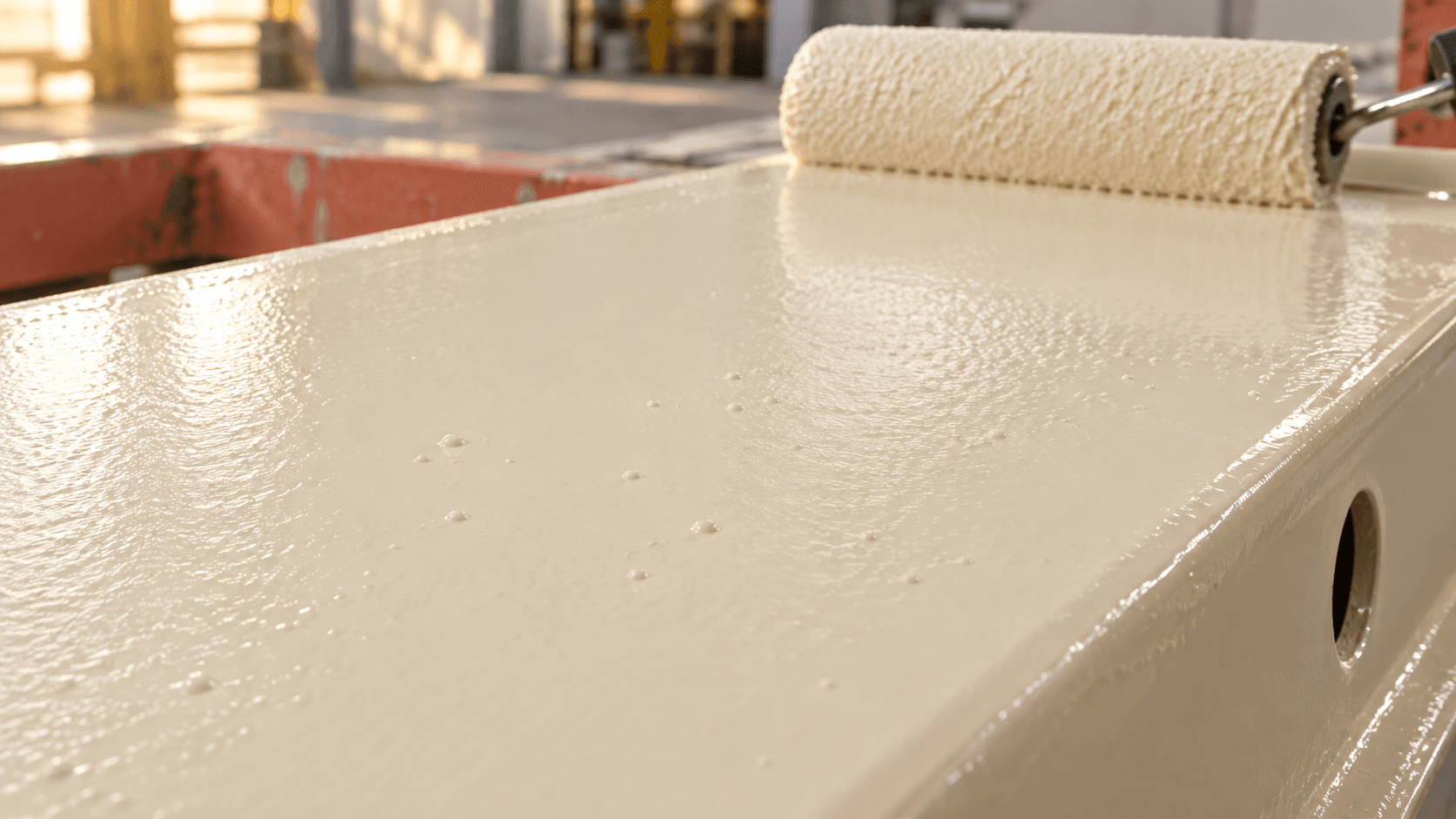
A defoamer for water based paint has to pass two different tests: remove the troublesome foam and leave an acceptable coating film. A fast foam collapse in a container does not settle the purchase decision if the applied paint develops craters, haze or a gloss change. Start by locating the air problem, then compare candidate grades under the incorporation and application conditions that create it.
The MOS coating additives category provides the commercial route for a grade and sample enquiry. Its defoamer entries establish a relevant supply enquiry, not a validated ranking of products for your formulation. The sequence below is for waterborne-paint formulators, production engineers and technical buyers preparing a comparative trial.
Locate the air problem before changing the additive
Record whether the symptom is a persistent surface foam layer during mixing or filling, bubbles in the wet applied film, or defects appearing as the film dries. Also record when it starts: pigment dispersion, letdown, recirculation, roller application or spraying. A defect visible after drying is a result to investigate; it is not, by itself, proof that more defoamer is needed.
BYK distinguishes surface defoaming from air release within the coating. That distinction changes the question for the supplier: ask for foam control at the identified process stage, rather than assuming one additive solves every entrained-air problem.
Treat compatibility as a film-quality constraint
A candidate needs a useful balance between foam-breaking activity and compatibility with the complete paint. In BYK’s mechanism guidance, excessive compatibility can reduce defoaming; excessive incompatibility can cause turbidity or cratering. Consequently, increasing dose to improve a foam result can introduce a different failure. Compare both endpoints before approving a change.
“Silicone” is not a sufficient selection specification. BYK’s silicone-defoamer explanation describes how chemical modification changes compatibility and how some silicone surface additives can stabilize foam rather than break it. A silicone-free requirement also does not prove that every remaining candidate is compatible. Name the binder, pigment system, sheen requirement and downstream process restriction when requesting a shortlist.
Match the incorporation trial to the supplied form
The addition point, available shear, mixing time and dose affect additive distribution. BYK’s guidance differentiates concentrates that need incorporation from pre-emulsified forms that may suit lower-shear addition. Ask for instructions for the proposed grade; do not transfer a grind-stage or post-addition instruction from another product simply because both are called defoamers.
A published waterborne-coatings study shows that incorporation can change film defects and that performance after storage can differ from the fresh paint. Its results are system-specific. They support testing the actual process and aged paint, not copying an rpm, dose, droplet-size target or storage limit into an unrelated formulation.
For a production substitution, first reproduce the current addition sequence in a controlled comparison. Then test a supplier-supported alternative sequence separately. Changing dose, addition point and mixing conditions together makes it harder to tell which change produced the result. This separation is a proposed trial design, not a universal manufacturing instruction.
Use a paired foam-and-film trial
BYK’s selection and test guidance treats a simple foam test as a preliminary screen and calls for testing the finished coating, including storage and relevant application conditions. A shortlist that wins only the container test is therefore incomplete.
| Trial decision | Keep comparable | Record before approval |
|---|---|---|
| Does it control the relevant foam? | Same finished paint, sample amount, temperature and foam-generation procedure | Foam level and decay at agreed observation times; filling or application symptom |
| Does incorporation change the outcome? | Grade, dose basis and formulation; change only the planned addition/mixing variable | Addition point, order, mixing history and whether the result can be reproduced |
| Does the applied film remain acceptable? | Same substrate, preparation, application method and film-build target | Cratering, pinholes, haze or gloss against the current-grade control |
| Does performance persist? | Agreed storage conditions; repeat the same application and foam procedure | Fresh versus stored result, separation and any new film defect |
| Can purchasing compare the offer? | Exact supplied grade and product form | Supplier-supported use range and incorporation; supplied-product versus active-content dose basis |
Include the current approved grade as the practical control. An additive-free control may help investigation if it is appropriate for your laboratory procedure; it is not a production recommendation. Agree the acceptance criteria before comparing samples. A candidate can then be rejected for a specific reason—insufficient foam control, unacceptable film appearance, poor persistence or an impractical incorporation requirement—instead of a vague “not compatible”.
Assess a replacement at supplier-supported trial levels. Equal percentages of two supplied products need not represent equal active content; even a normalized active-content comparison does not establish equivalent chemistry or performance. Where the basis is unavailable, leave it unresolved and request clarification rather than inventing a conversion.
Request a shortlist that the supplier can defend
Send a waterborne-paint defoamer sample and quotation enquiry with the binder and formulation type, pigment/filler system, current defoamer, observed symptom and process stage, manufacturing and application method, sheen or clarity requirement, intended storage conditions and the proposed comparison record. Include any silicone restriction and explain the downstream reason, rather than treating the label as a performance guarantee.
Ask the supplier to identify the proposed grade and product form, current TDS/SDS, supported incorporation route, recommended trial range and dose basis, plus any known limitations for the stated coating. Add sample quantity, expected annual demand, packaging and destination so the technical shortlist can become a comparable commercial offer. No dosage, grade equivalence, certification or defect-free result is guaranteed here.
Two questions before a substitution trial
Can a jar test select the final defoamer?
It can screen candidates, but it does not establish the appearance or performance of the finished applied paint. Compare foam control with film defects under the intended process and repeat the agreed checks after storage.
Should a new defoamer use the same addition point as the current grade?
Use that as a controlled comparison only when the proposed grade supports it. Confirm the supplied form and incorporation instructions, then test a different addition route separately if needed. Do not assume all concentrates or emulsions require the same shear.