
Dispersing Agent for Paint: A Grade Selection and Trial Guide
A dispersing agent for paint must help the pigment remain dispersed in the actual binder and liquid phase after grinding and let-down. Shortlist it from the formulation and the failure being corrected: poor color development, flocculation, excessive mill-base resistance to flow or storage instability. A waterborne label or a matching trade-name description is not sufficient evidence of compatibility.
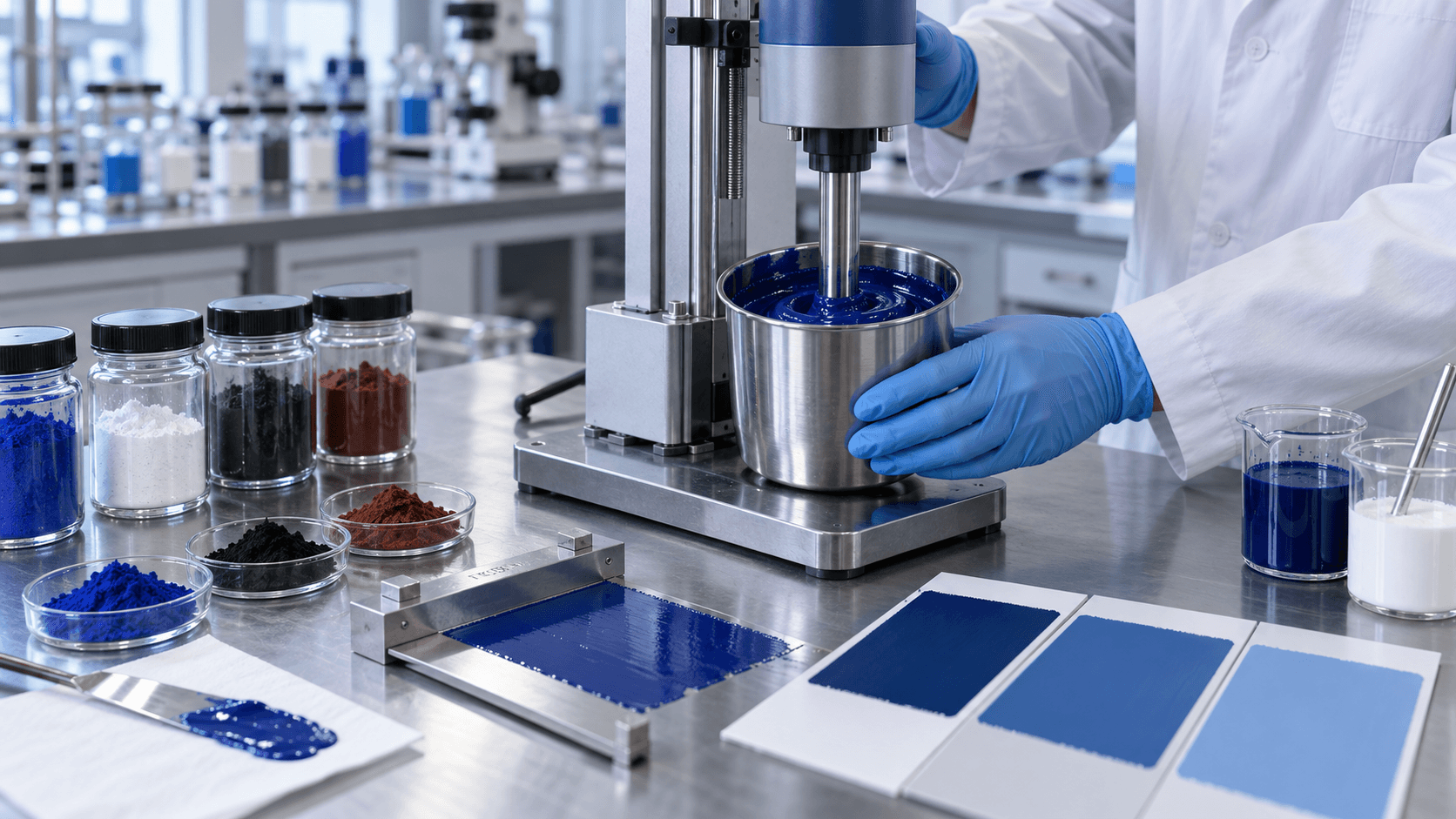
A dispersing agent for paint must help the pigment remain dispersed in the actual binder and liquid phase after grinding and let-down. Shortlist it from the formulation and the failure being corrected: poor color development, flocculation, excessive mill-base resistance to flow or storage instability. A waterborne label or a matching trade-name description is not sufficient evidence of compatibility.
Why dispersant selection starts with the paint system
The liquid phase and binder resin determine which dispersant chemistry is likely to be compatible. Waterborne systems typically require water-compatible grades, while solventborne systems require solvent-compatible chemistry. The coating additives catalogue lists Troysperse 90W for waterborne pigment dispersion and Troysperse CD1 for solvent-based systems. These are formulation tools, not universal substitutes; each must be tested in the target paint system before use.
Wetting versus dispersion stabilization: two separate demands
Pigment dispersion involves wetting, mechanical separation of agglomerates and stabilization against re-agglomeration. A wetting/dispersing additive supports the first and third steps; it does not replace the grinding energy required by the process. Stabilization can involve steric or electrostatic effects depending on the chemistry and medium. Check the candidate in the mill base and after let-down because the surrounding resin and liquid composition change.
Specifying by binder, pigment package and grind process
Before asking for a sample, define the paint system in the following terms:
- Binder chemistry and liquid phase: acrylic, alkyd, epoxy, polyurethane or hybrid; water, solvent or solvent-free.
- Pigment package: inorganic pigments, organic pigments, carbon black, extenders, or blends; surface treatment and oil absorption affect dispersant demand.
- Grind process: high-speed disperser, bead mill, basket mill or three-roll mill; shear rate and residence time influence dispersant selection.
- Target dispersion quality: color development, gloss, haze, transparency and rub-up performance.
- Stabilization requirement: long-term shelf stability, heat-age stability and resistance to flocculation or settling.
Screen representative pigments separately where useful, then confirm the candidate in the complete pigment package. A mixed-pigment coating may expose compatibility problems that a single-pigment test misses. Record pigment grade and surface treatment so a raw-material change is not mistaken for a dispersant effect.
Compatibility screening and storage tests
Use the current formulation as a benchmark. Keep pigment loading, resin, liquid balance, equipment and trial conditions documented. Test candidate addition levels according to grade guidance, recording whether dosage is as supplied or active and whether it is based on pigment mass or total formula. Do not compare equal product weights without checking those bases. Measure fineness of grind, flow behavior, color strength and film appearance, then repeat the relevant checks after let-down and storage.
Trial comparison without assuming drop-in equivalence
Agree storage temperatures, durations and pass criteria that fit the product rather than inventing a universal accelerated test. Examine settling and ease of redispersion, separation, rub-up, color and relevant film properties. Equal grind time alone does not establish equal dispersion; record the achieved endpoint and process conditions. Retain the incumbent control so differences can be attributed to the trial rather than a changed pigment or process.
RFQ checklist for dispersing agent samples and support
- Binder, liquid phase, pigment grades and loading, including surface treatment where known.
- Current dispersant, addition level and dosage basis, addition stage and observed limitation.
- Grind equipment, mill-base composition, process conditions and let-down sequence.
- Required color, flow, film and storage results with agreed test methods.
- Sample quantity, annual requirement, packaging, destination and required TDS/SDS and batch COA.
Request a specification-matched quotation
Send MOS the formulation and trial checklist through the coating additives category. For a branded candidate, identify the exact grade in the Arxada materials range and request current documentation. Ask for a shortlist and sample quotation for your system; approve scale-up only after the candidate meets the agreed laboratory and pilot criteria.
FAQ
Does a dispersant replace grinding?
No. It supports wetting and stabilization; the process must still supply the mechanical action needed to separate agglomerates.
Can one dispersant serve waterborne and solventborne paint?
Some grades are offered for multiple media, but suitability remains formulation-specific. Check the exact grade, resin, pigment package and process.
Should I compare two grades at equal product weight?
Not without checking active content and dosage basis. Record whether the recommendation is as-supplied or active and based on pigment or total formula; then evaluate a documented trial series.
What should be checked after a successful grind?
Assess the let-down paint and storage results as well as initial dispersion. Check relevant flow, color, settling, redispersion and film properties against the incumbent control.