
Polyamide Rheology Modifiers: Qualify Activation Before Scale-Up
Distinguish a material melting point from grade-specific incorporation, then qualify shear history, recovery and application endpoints before scale-up.
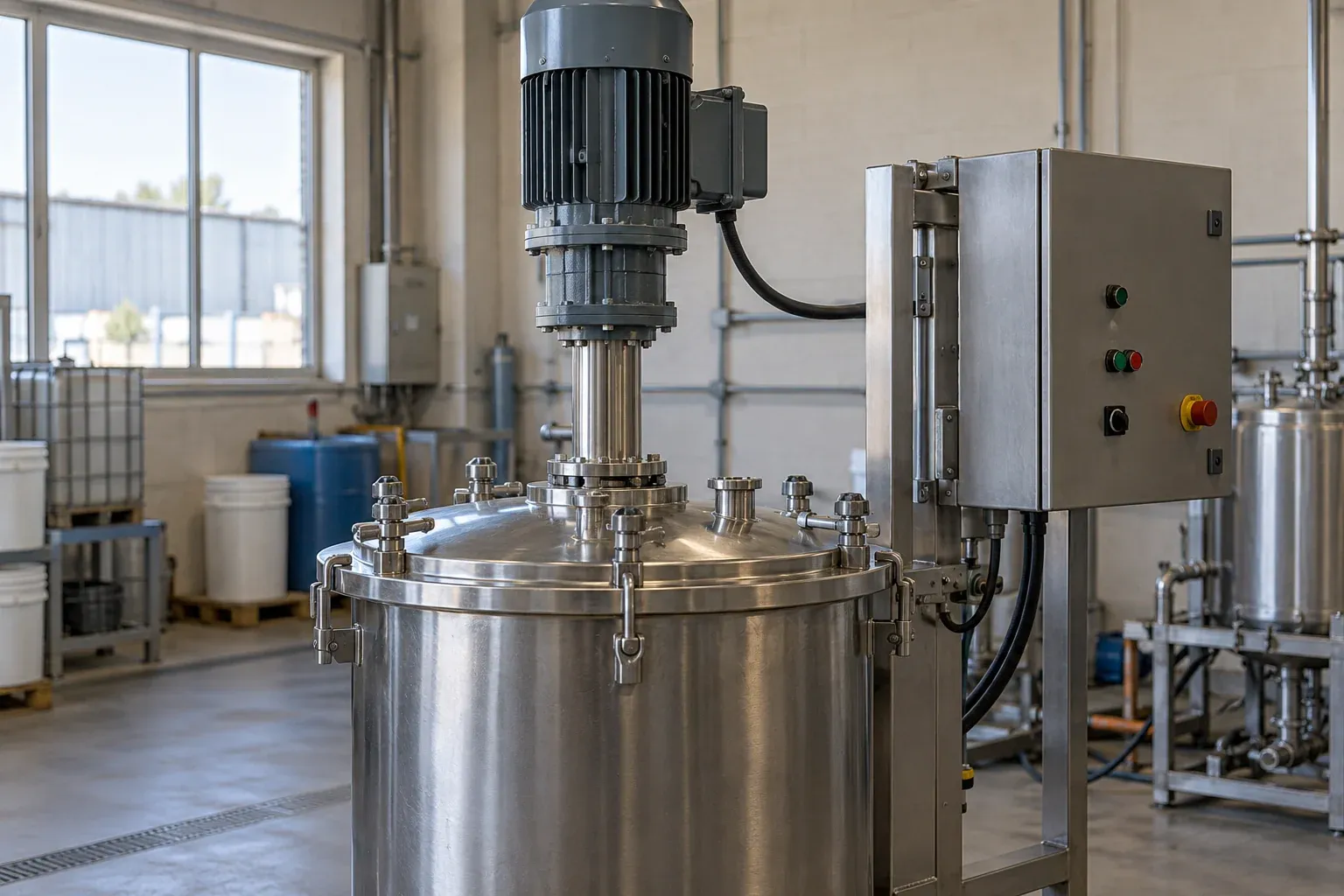
Polyamide wax rheology modifier activation is a process-qualification question. Selecting the right family name or reading a material's melting point does not establish how a particular grade should be incorporated into a coating. Before ordering a production quantity, connect the exact grade and document revision to the formulation, the available dispersion process and the behaviour that must recover after application.
The Arkema materials catalogue lists different CRAYVALLAC grades. They provide a real route for a sample and document enquiry, but a grouped catalogue range is not a process instruction for every listed product. This guide uses attributed manufacturer documents to frame the qualification question; it reports no MOS formulation trial or guaranteed performance.
Start with the grade and the formulation
Define what the rheology modifier must accomplish. Resistance to settling during storage, flow during application and recovery after application are related requirements, but passing one check does not establish all three. Specify the binder and liquid phase, solids basis, intended application and properties that must be retained. Identify the incumbent grade and process if this is a replacement qualification.
A polyamide rheology additive is also a different purchasing task from a matting wax. The existing wax-matting guide concerns finished-film gloss and associated surface properties. A lower gloss number cannot qualify a rheological network. Likewise, the silica selection guide addresses silica grades; its material-family distinctions should not be used as instructions for an amide wax.
Ask for the current TDS and the instructions applicable to the offered grade and formulation. Record the document revision with the sample identity. A family brochure, an older distributor table and a current grade sheet may describe different scopes; resolve the difference before choosing a processing condition.
Separate a material descriptor from a process condition
The Arkema SUPER TDS, dated 24 September 2026, illustrates the distinction. It lists a material melting point of 125°C, while its processing section describes dispersion at 50–60°C for 15–30 minutes, dependent on the coating system. Those are manufacturer statements about that identified grade. The melting point is not an instruction to heat a formulation to 125°C; the stated processing conditions are not universal settings for other grades, equipment or formulas.
Read the property name, measurement or process context, grade and revision together. Do not turn a thermal descriptor into a maximum service temperature, a minimum activation temperature or an equipment setting. A number becomes useful only when its role in the decision is clear.
| Item in a document or trial | What must remain explicit | What it cannot establish alone |
|---|---|---|
| Material melting point | Identified grade and stated property | The required temperature of the formulated batch |
| Dispersion or activation guidance | Actual system, addition stage and processing instructions | A transferable recipe for every polyamide wax |
| Viscosity at one test condition | Method, temperature, shear and sample history | Storage stability, application flow and recovery together |
| A claim of activation-free processing | The named grade and intended formulation chemistry | Permission to omit mixing or ignore moisture |
The table is a proposed document-review aid, not a specification or a replacement for the supplier's instructions. If the current documents cannot be reconciled with the offered material, hold the trial design and request clarification.
Test the process history and the recovery
The SUPER sheet describes formation of a structured network and time-dependent viscosity recovery after application. That provides a reason to examine the sequence of conditions, rather than rank candidates by the highest single viscosity result. It does not establish what recovery time or viscosity is acceptable in the buyer's coating.
Prepare an identified reference and a written comparison plan with the responsible formulation team. Record the order of addition, equipment, batch size, relevant temperature history and dispersion endpoint. An equipment speed by itself is not a transferable measure of the shear experienced by a different batch. Keep formulation and sample identities traceable throughout the comparison.
Use two clearly labelled stages when different grades need different incorporation processes. First, a controlled screen can compare candidates under a documented common process that is appropriate for them. A later development stage can use the supplier's grade-specific process. If both grade and processing change together, report the result as a combined change; it does not isolate a chemistry effect.
Agree the measurement history before comparing samples. Distinguish flow under the relevant application conditions from behaviour after a defined rest. Do not call every fall in viscosity thixotropy: a claim about time-dependent recovery requires an appropriate time-dependent check. Use the relevant method and formulation expertise, without inventing a universal rest period or recovery threshold.
Then examine the outcomes that the application actually needs. Storage checks should include the agreed settling and redispersion observations. Application checks should include the required flow, sag or film-appearance criteria. Keep the reference and specimen preparation comparable. A successful fresh viscosity reading does not replace these endpoints, and a stored sample should not be ranked against a fresh control without accounting for that difference.
Treat activation-free wording as system-specific
The separately read Arkema SLT TDS, also dated 24 September 2026, describes activation-free incorporation in moisture-curing methoxysilane systems. The sheet also carries a heat-and-shear addition note. Ask the supplier which instructions apply to the actual formulation; neither phrase should be expanded into a universal rule for all coatings.
Its processing discussion separately emphasizes moisture control and warns against assuming that lower-temperature vacuum processing efficiently removes water introduced with raw materials. The purchasing implication is to confirm the condition of the ingredients and the intended process, rather than assume that a vacuum step corrects an unresolved moisture input. This guidance is attributed to SLT's stated system; it is not a drying procedure or a claim about every sealant.
These distinctions also prevent a false substitution decision. Similar appearance, a shared polyamide description or equal added mass does not establish interchangeable processing. Keep any claimed equivalence separate from a trial hypothesis until the actual formulation and required endpoints have been evaluated.
Request a grade-specific sample and process dossier
Send the Arkema grade enquiry the intended coating or sealant chemistry, binder and liquid phase, target function, incumbent material and current incorporation process. Include the relevant equipment and temperature history, the properties that must be retained, and the agreed sample-evaluation endpoints. Identify whether the request concerns storage behaviour, application flow, recovery or more than one of these.
Request the exact offered grade, current TDS/SDS, sample identity and lot COA where applicable, together with clarification of any processing-note discrepancy. Include sample and order quantities, packaging and destination so the technical request can support a meaningful quotation. Confirm the process with the responsible supplier and formulation team before scale-up. Catalogue presence does not guarantee current stock, distribution authorization, regulatory suitability or performance in a new formulation.