
How to Qualify Sag and Leveling in a Waterborne Coating Thickener Trial
Test sag and leveling separately using paired specimens and the approved control before committing to a replacement thickener.
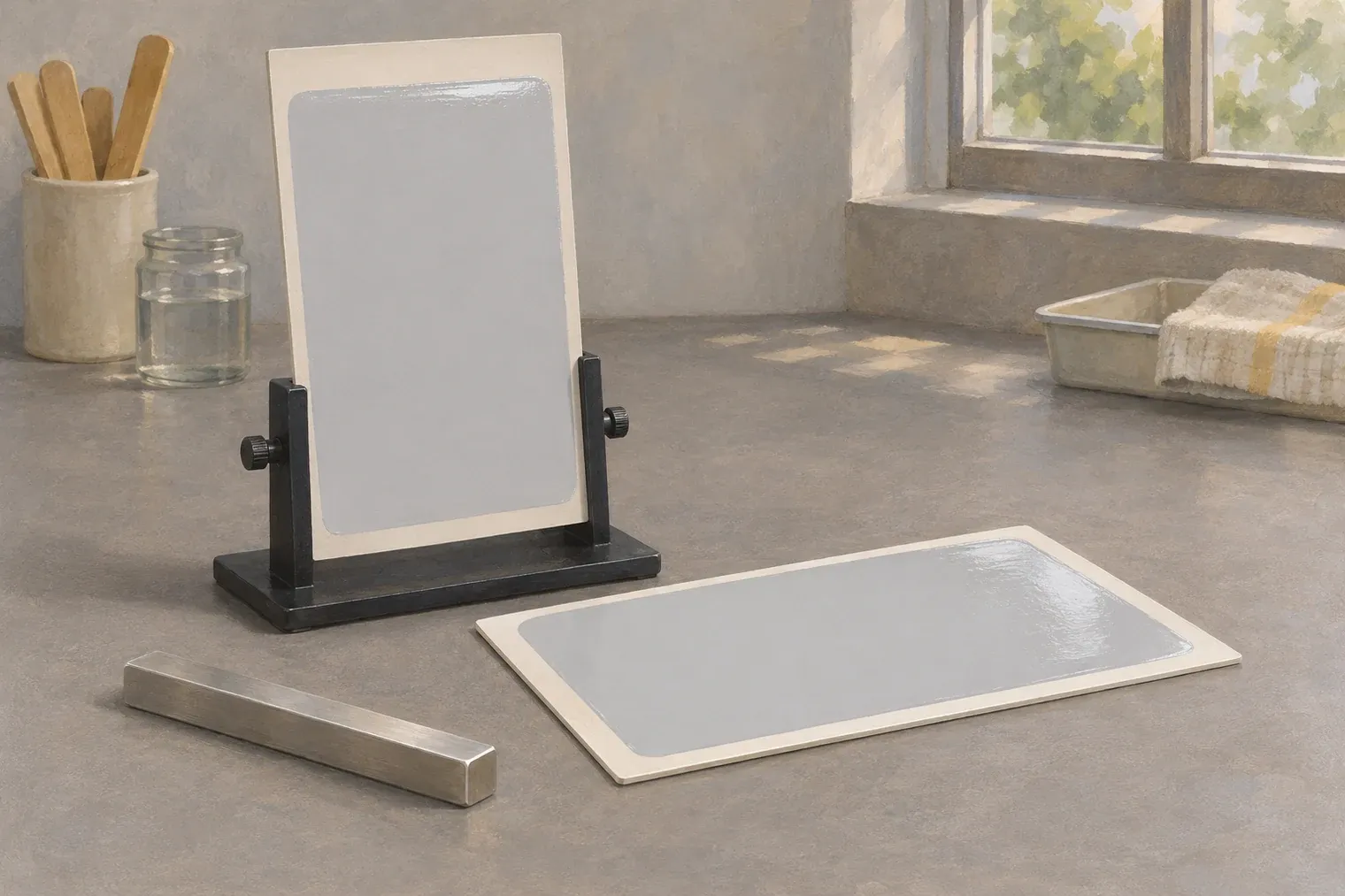
A replacement thickener can hold a wet coating in place on a vertical part and leave stroke marks in the finish. Another candidate can smooth those marks and still sag at the specified film build. A viscosity number taken from the can cannot distinguish these outcomes. Before buying a replacement, set separate acceptance criteria for sag and leveling and compare both with the approved coating.
AI-generated illustration of two specimen orientations. It does not show test results.
Split the coating before changing the thickener
Keep a retained batch of the finished paint as an incumbent reference. For the substitution trial, make a common fresh base without the thickener and split it into matched portions for the incumbent and the candidate. If the process requires the thickener before a common split is possible, prepare separate matched batches with the respective additives. Keep the binder, pigment loading, tint, substrate and preparation constant. Record water additions, pH, material temperature, addition order, mixing history and the interval before application. If the candidate requires a different pH or incorporation procedure, document that adjustment and run it as a separate comparison. A simultaneous formulation or process change makes it difficult to isolate the cause of a defect.
Ask the supplier whether its proposed addition is expressed as supplied product or active matter. That distinction affects both the amount of additive and the water or carrier it brings into the batch. Equal active doses can help structure a first screen. They do not make two thickener chemistries equivalent. Retain a sample from each mix and agree how to repeat the comparison if a result is close to the release limit.
Test the film in two orientations
Use a vertical sag specimen and a separate leveling drawdown from the same mix. Record the intended production film build and the wet-film thicknesses used for screening. Use the same preparation, application settings and observation times across comparable specimens. A specimen moved, tilted or touched after application cannot serve as the undisturbed comparison.
ASTM D4400 describes a laboratory sag test for liquid coatings with a multinotch applicator. ASTM D4062 describes a drawdown comparison for white and light-tinted architectural paints and notes an alternate visual approach for unpigmented, textured or deep-tinted coatings. Agree a finish assessment appropriate to the actual colour, gloss and substrate with the buyer before testing. Use the applicable agreed procedure and edition if the purchase specification calls for a standard.
| Acceptance question | Controls and record | What a failure changes |
|---|---|---|
| Will the wet film stay in place at the required build? | Vertical specimen, substrate preparation, time before orienting, wet-film build and the location of any sag | Recheck the proposed formulation or application window before ordering |
| Do application marks relax enough to meet appearance requirements? | Separate leveling drawdown, agreed viewing conditions and observation time, assessed against the same reference | Hold an approval for the specified finish even if sag passes |
| Do results carry over to the actual application? | Approved control and candidate sprayed or rolled on representative parts at their agreed settings | Review bench-to-line differences before approving the substitute |
Read recovery alongside the coating results
A rotational viscosity result can help explain why the specimens differ. ASTM D2196 distinguishes apparent viscosity, shear thinning and time-dependent recovery with methods appropriate to its scope. Record the instrument, geometry or spindle, speed or shear rate, temperature, preshear and elapsed time. Compare only readings taken on the same basis. If a candidate recovers differently, use that observation to inform the next controlled test. The vertical film and finish checks still decide acceptance.
Keep any in-can storage check separate. A coating that resists settling while stored has not demonstrated that it can level after application. Likewise, a good fresh drawdown does not establish that the same batch will perform after storage. Repeat the independent film checks after an agreed conditioning period if that matters to the buyer.
Send the supplier the results you need to repeat
Share the binder type, application method, specified film build, incumbent grade, and the separate results for sag and appearance. Ask for the exact candidate grade, dose basis, recommended incorporation conditions, and current TDS, SDS and batch documentation. If the lab comparison passes, confirm the operating window on representative parts before a production order. The coating additives catalogue is a starting point for requesting grade and sample information.